PARTICIPATION IN THE INTERNATIONAL SCIENTIFIC CONFERENCE IN NOVA ZAGORA
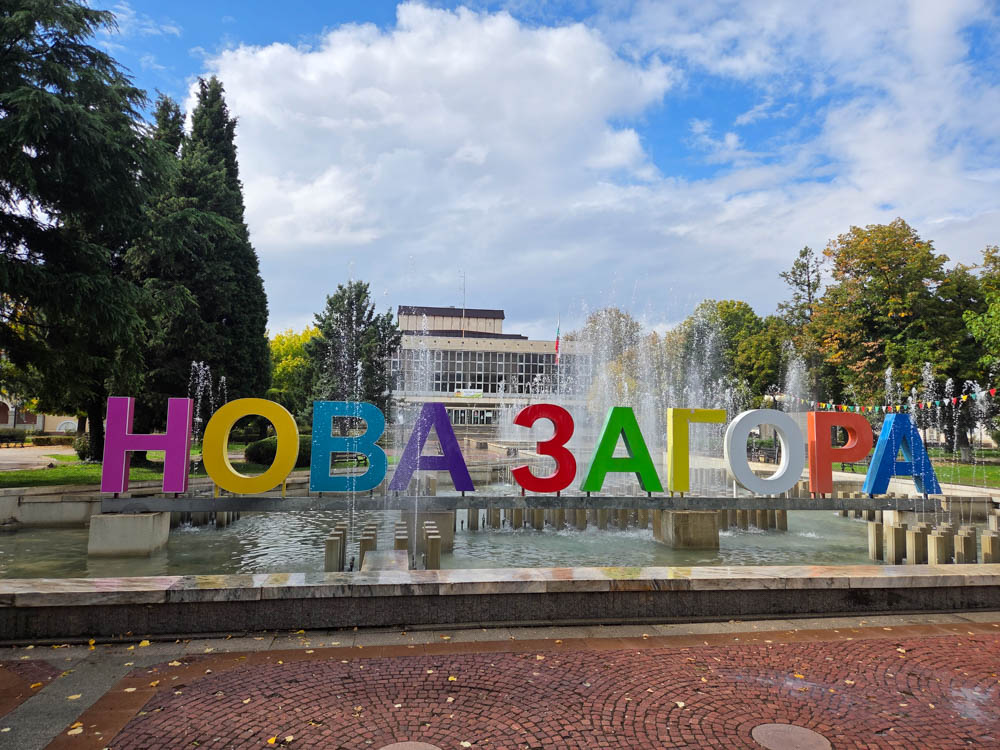
On 12 and 13 October 2026, the International Scientific Conference “100 Years of the Historical Museum – Nova Zagora: The Pearl of Thrace” was held in Nova Zagora, Republic of Bulgaria, to mark the centenary of the founding of the Historical Museum – Nova Zagora. The conference was organised by the museum’s director, Gencho Dimitrov, MA.
The conference was attended by Aleksandar Jordanoski, MA, Director of the National Conservation Centre – Skopje, and Dr. Jehona Spahiu Janchevska, art historian and Conservation Advisor specialising in the artistic heritage of the Byzantine and Post-Byzantine periods (9th–18th centuries) at the Department of Artistic Heritage, as well as Head of the Sector for Research and Conservation Project Design of Immovable Cultural Heritage.
Aleksandar Jordanoski, MA, presented the institution through a paper entitled “The Historical Role of the National Conservation Centre in the Protection of Cultural Heritage in Macedonia”. His presentation addressed the Centre’s longstanding activities, its development and its significance within the cultural heritage protection system. The National Conservation Centre, as a leading specialist institution in this field, began its activities in 1949 and has since built a tradition spanning several decades in the research, documentation, conservation and restoration of immovable cultural heritage.
Dr. Jehona Spahiu Janchevska delivered a scientific paper entitled “Gaia, Thalassa, and the Anemoi: The Representation of Personifications in the Compositions of the Last Judgement”. The paper focused on the representation of the personifications of Earth, Sea and Winds within the composition of the Last Judgement.
The study examines the various visual forms of these personifications and their transformation within the Christian eschatological context, drawing connections between biblical texts, painting manuals and earlier visual traditions. Particular attention was given to examples from North Macedonia, including the churches of St. Mary Peribleptos and St. Mary Bolnička in Ohrid, the Church of St. Demetrius in Veles, Goren Manastirec, the Monastery of Slivnica, the Monastery of Kuchevishte, the Church of St. George in Lazaropole and in Banjani, Kostinci, and other sites. These examples illustrate the different ways in which the personifications are represented.
The conference featured scientific and professional papers covering archaeology, history, art history, museology, conservation and restoration, as well as interdisciplinary research. In addition to participants from the Republic of Bulgaria, contributions were presented by representatives from the Republic of North Macedonia, Greece, Iran, Italy, Ukraine and other countries, reinforcing the conference’s international character.
As part of the conference programme, a multi-author monograph dedicated to research on the burial mound necropolis in the Bogoshina area of Prohorovo was also presented at the Cultural Workers’ Club. The publication is entitled PROHOROVO MINING: Archaeological Studies, Volume I – The Burial Mound Necropolis in the Bogoshina Area (ПРОХОРОВО МАЙНИНГ Археологически проучвания, т. 1, Могилният некропол в местността Богошина).
During the conference, participants also had the opportunity to explore the significant archaeological and cultural heritage of Nova Zagora and its surrounding area, particularly the Karanovo burial mound.
The National Conservation Centre’s participation in this international scientific conference provided an opportunity to present the institution’s professional and scientific research activities and to exchange professional and scholarly experience with colleagues from the region and beyond.
We extend our sincere congratulations to the organisers and the Historical Museum – Nova Zagora on this significant centenary, and wish them continued success in their work in the decades to come.
Prepared by: Dr. Jehona Spahiu Janchevska, Art Historian and Conservation Advisor specialising in the artistic heritage of the Byzantine and Post-Byzantine periods (9th–18th centuries), and Head of the Sector for Research and Conservation Project Design of Immovable Cultural Heritage.
Photographs: Dr. Jehona Spahiu Janchevska and Aleksandar Jordanoski, MA.